

It’s 2am on a sweltering January night in Brisbane. Your air conditioner’s struggling, barely cooling your home to 28°C while the humidity makes it feel like you’re sleeping in a sauna. You’re lying there awake thinking “I really should’ve serviced this thing months ago.” Sound familiar?
Regular air conditioner maintenance isn’t just about comfort—it’s about preventing those midnight panic searches, the emergency repair headaches, and the sleepless nights when Brisbane temperatures hit 38°C. Yet most of us only think about AC maintenance after something’s already gone wrong.
This guide covers everything you need to know: from simple DIY tasks you can handle yourself to understanding when you need professional service, to creating a maintenance schedule that prevents breakdowns before they happen. You’ll learn how to keep your system running efficiently, extend its lifespan by years, and avoid the stress of emergency repairs during Brisbane’s brutal summer heatwaves.
How Often Should Air Conditioner Be Serviced?
Air conditioners should be professionally serviced at least once per year, ideally in early spring (September-October) before Brisbane’s summer heat arrives.
Recommended Service Frequency:
| System Type | Professional Service Frequency | Why |
|---|---|---|
| Standard residential use | Once per year (pre-summer) | Prevents breakdowns during peak season |
| Heavy use (running daily) | Twice per year (spring & autumn) | Catches wear from constant operation |
| Coastal areas | Twice per year | Salt air accelerates corrosion |
| Homes with pets/allergies | Every 6 months | Filters clog faster, air quality matters |
| Commercial systems | Quarterly | High usage demands frequent checks |
Between professional services:
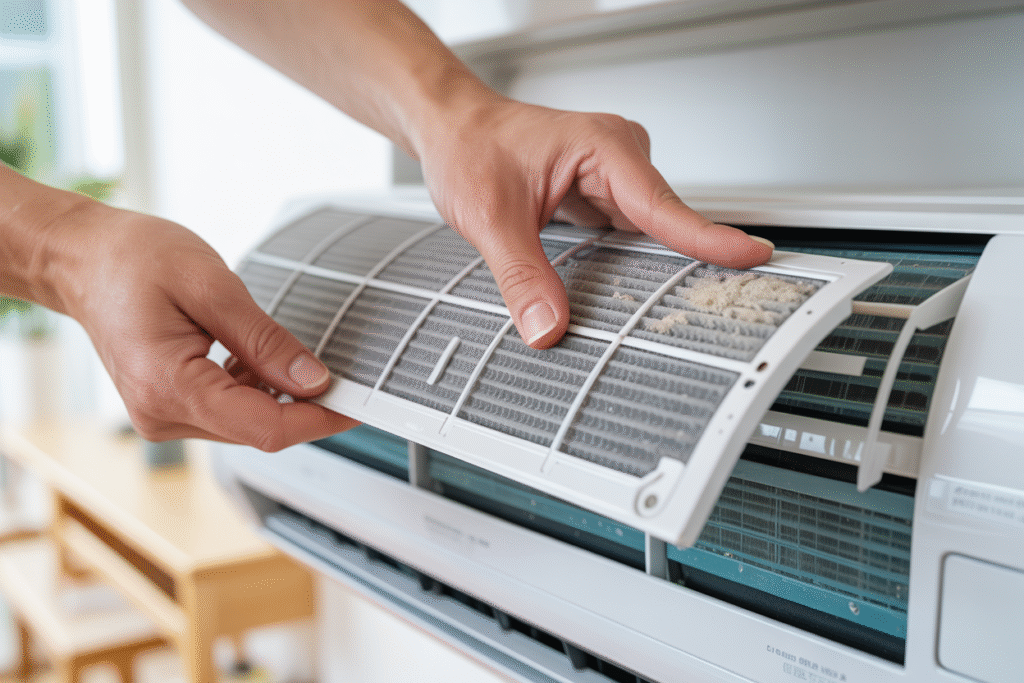
- Clean or replace filters monthly during peak summer
- Check outdoor unit for debris every 2-3 months
- Inspect for unusual noises or performance issues regularly
Regular annual servicing prevents 85% of common breakdowns, extends system lifespan by 40%, and can reduce energy bills by up to 30%. For Brisbane homes where AC runs heavily from November through March, pre-summer servicing is non-negotiable.
Why Air Conditioner Maintenance Matters
The Real Cost of Neglecting Maintenance
Skipping regular air conditioner maintenance doesn’t save you money. It costs you way more in the long run.
Had a customer last year from Coorparoo who kept putting off her AC service because “it seemed fine.” Then January hit, temperatures climbed to 39°C, and the compressor completely died. All because regular servicing would’ve caught the refrigerant leak six months earlier.
85% of AC breakdowns are completely preventable with regular maintenance.
Top Benefits of Regular AC Maintenance
- Lower energy bills: Well-maintained units use 15-30% less electricity
- Longer system lifespan: Maintained systems last 15-20 years vs. 8-12 years neglected
- Fewer breakdowns: Catch small issues before they become emergencies
- Better air quality: Clean filters mean healthier indoor air
- Warranty protection: Manufacturers require proof of annual servicing
- Peak performance: Actually keeps you cool during 38°C+ heatwaves
What Happens During Brisbane Summers Without Maintenance
Without maintenance, your system works harder and runs longer. Brisbane’s humidity puts extra strain on every component. Complete failure during a heatwave when you need it most means nobody’s sleeping, kids are grumpy, you’re exhausted, and everyone’s snapping at each other.
🌡️ BRISBANE REALITY CHECK: Without maintenance, your system works harder and runs longer. Brisbane's humidity puts extra strain on every component. Complete failure during a heatwave when you need it most means nobody's sleeping, kids are grumpy, you're exhausted, and everyone's snapping at each other.
Types of Air Conditioner Maintenance
| Task Type | DIY-Friendly ✓ | Requires Professional |
|---|---|---|
| Filter cleaning/replacement | ✓ | |
| Wipe down vents and surfaces | ✓ | |
| Clear outdoor unit debris | ✓ | |
| Check thermostat batteries | ✓ | |
| Visual damage inspection | ✓ | |
| Refrigerant check/top-up | ✓ | |
| Electrical connections testing | ✓ | |
| Coil deep cleaning | ✓ | |
| Compressor performance testing | ✓ | |
| Thermostat calibration | ✓ |
DIY Maintenance Tasks (What You Can Do Yourself)
Good news: you don’t need to be handy to handle basic air conditioner maintenance.
Monthly Tasks:
- Clean or replace air filters – Turn off the unit, pop open the front panel, slide out the filter, and either vacuum it clean or replace it. Takes five minutes.
- Wipe down indoor unit vents and surfaces
- Check thermostat settings and batteries
- Clear debris from outdoor unit – Keep at least 30cm clearance around all sides
Quarterly Tasks:
- Inspect outdoor unit for damage or corrosion
- Check drainage pipes for blockages
- Test system performance
- Listen for unusual noises
Professional Maintenance Tasks (What Technicians Do)
What’s included in professional service:
- Refrigerant level check and top-up if needed
- Electrical connections inspection and tightening
- Condenser and evaporator coil cleaning
- Compressor performance testing
- Thermostat calibration
- Fan motor and blade inspection
- Drainage system cleaning and testing
- Overall system performance assessment
- Detailed service report with recommendations
Why professionals are necessary:
Specialized equipment like pressure gauges and leak detectors aren’t sitting in your garage. Refrigerant handling requires licensing because it’s dangerous and environmental regulations are strict. Plus, a good technician spots problems you’d never notice until they become emergencies.
⚠️ SAFETY WARNING: Specialized equipment like pressure gauges and leak detectors aren't sitting in your garage. Refrigerant handling requires licensing because it's dangerous and environmental regulations are strict. Plus, a good technician spots problems you'd never notice until they become emergencies.
Air Conditioner Maintenance Schedule for Brisbane Homes
Brisbane’s climate is unique—brutal summers, humid storms, and brief winters where the AC sits idle. Your maintenance schedule needs to match that reality.
Spring (September-November): Pre-Summer Preparation
This is your most important service window. Book professional service for late September or early October before everyone else remembers summer’s coming.
September tasks:
- Book professional service
- Replace all air filters
- Clear outdoor unit of winter debris
- Test system performance
Why September matters: You beat the rush, technicians have better availability, and you’re identifying problems before you desperately need cooling.
Summer (December-February): Peak Season Vigilance
Your AC’s working overtime during Brisbane’s 35-40°C days with suffocating humidity.
Monthly during summer:
- Check and clean/replace filters every 3-4 weeks
- Monitor electricity bills for unexpected spikes
- Clear outdoor unit after storms
- Listen for new noises or performance changes
If anything seems off during summer, don’t wait. A small problem in January becomes an expensive emergency in February when every technician in Brisbane is booked solid.
Autumn (March-May): Post-Summer Recovery
After months of heavy use, your system needs attention before you forget about it for winter.
March-April tasks:
- Schedule post-summer professional inspection if system ran hard
- Deep clean all filters and vents
- Check for any damage from summer storms
- Inspect outdoor unit for corrosion
Winter (June-August): Preparation and Planning
Winter tasks:
- Run system briefly once a month (prevents seals drying out)
- Plan and budget for spring servicing
- Book your September service appointment in June
Brisbane-Specific Timing Considerations:
Brisbane’s weather doesn’t follow the calendar neatly. Watch the Bureau of Meteorology’s long-range forecasts. If they’re predicting an early hot spring, move your schedule forward.
Coastal Brisbane suburbs need more frequent maintenance due to salt air accelerating corrosion. If you’re within 5km of the bay or ocean, six-monthly services are better than annual.
Brisbane’s storm season (November-March) means your outdoor unit cops a beating. After any severe storm, do a visual inspection.

Common Air Conditioner Problems Prevented by Regular Maintenance
Refrigerant Leaks
Your AC gradually loses refrigerant through tiny leaks. System cools less effectively, electricity bills climb, and eventually the compressor burns out. Annual pressure testing catches leaks when they’re small.
Warning signs: Ice on indoor unit, warm air from vents, hissing sounds, climbing electricity bills.
Dirty Condenser Coils
Brisbane’s dust, humidity, and pollen coat your outdoor condenser coils, preventing heat from escaping. System runs constantly but never quite cools properly. Professional coil cleaning removes years of buildup.
Warning signs: Outdoor unit running constantly, weak airflow, system struggles on hot days.
Blocked Drain Lines
In Brisbane’s humidity, your AC removes litres of water daily. When algae and debris block the drain pipe, water backs up into your walls or ceiling. We flush drain lines during service to prevent this.
Warning signs: Water pooling around indoor unit, damp spots on ceiling, musty smell.
Electrical Component Failures
Vibration, heat cycles, and Brisbane’s humidity loosen electrical connections. Contactors and capacitors degrade. Technicians test components, tighten connections, and replace wearing parts before they fail catastrophically.
Warning signs: System won’t start, intermittent operation, burning smell, tripped circuit breaker.
Thermostat Calibration Issues
Thermostats gradually lose calibration. You set it to 22°C but it’s maintaining 25°C. System runs constantly but you’re never comfortable. Calibration testing ensures accurate temperature control.
Warning signs: Room temperature doesn’t match setting, system runs constantly, uneven cooling.
Small problems caught early stay small. Same problems ignored become major system failures.
Warning Signs Your AC Needs Professional Service
Most people wait too long to call for help because they’re not sure if what they’re experiencing is normal or actually a problem.
Immediate Red Flags (Call Today, Don’t Wait)
Burning smell when system runs – Shut the system off immediately. This is a fire risk. Frayed wiring, overheating motors, or electrical shorts need same-day attention.
Water pooling around indoor unit – A few drops is normal. A puddle means blocked drain lines or frozen coils. Water damage is expensive.
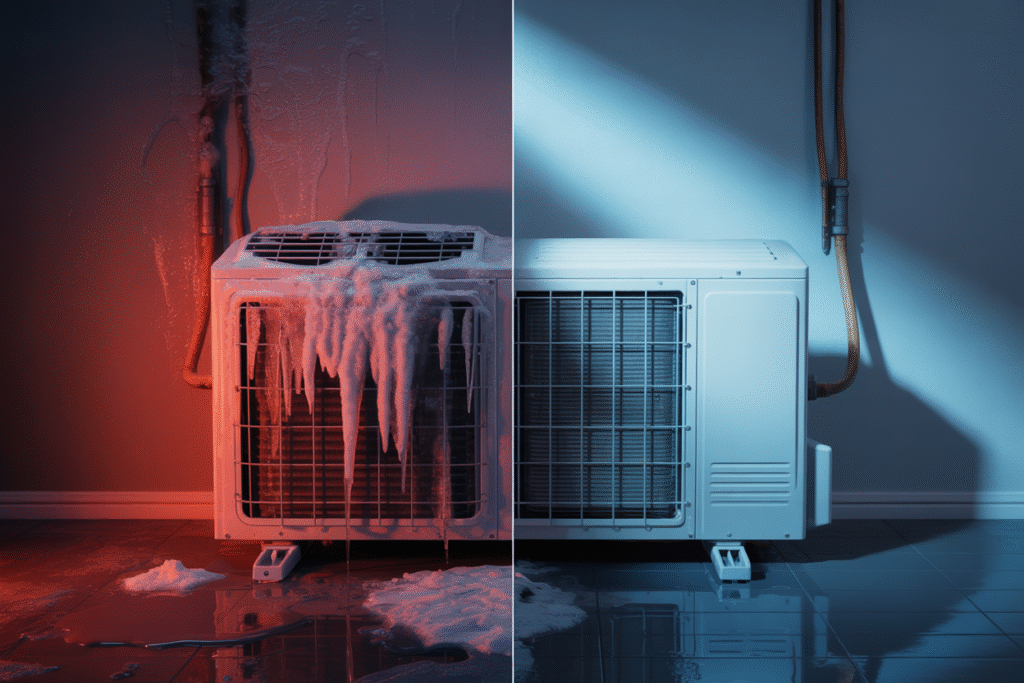
Ice forming on indoor unit – Your air conditioner should never have ice on it. Refrigerant problems or severe airflow restrictions. Continuing to run it causes compressor damage.
Loud grinding, squealing, or banging noises – Something’s loose, broken, or about to break.
Electrical tripping repeatedly – There’s an electrical fault. Don’t just keep resetting the breaker.
Early Warning Signs (Schedule Service Soon)
Weak airflow from vents – Dirty filters, blocked ducts, or failing fan motors.
System running constantly but not reaching temperature – Efficiency problems. Could be refrigerant levels, dirty coils, or compressor issues.
Gradually increasing electricity bills – System’s working harder due to declining efficiency.
Musty or moldy smells when AC runs – Mold in the ductwork or drain line issues.
When to DIY Troubleshoot First
Before you call, check:
- Circuit breaker hasn’t tripped
- Thermostat has batteries and is set correctly
- Filters are clean
- Outdoor unit has power and is clear of debris
- All vents are open and unblocked
If those simple checks don’t fix it, that’s when you call professionals.
Brisbane-Specific Concerns
After major storms: Always inspect outdoor unit for physical damage. Brisbane’s November-March storms can bend fins or jam debris into fans.
During extended heatwaves: If your system’s struggling during multi-day 38°C+ periods, that’s when underlying problems reveal themselves.
The bottom line? Trust your instincts. If something seems off, it probably is. Calling for a diagnosis is always better than ignoring the problem and turning a simple repair into a major disaster.
Choosing the Right AC Maintenance Service in Brisbane
Not all AC companies are created equal. You need to know how to tell the difference.
What to Look for
Licensing: Every technician handling refrigerants must have an ARCtick license. If they can’t show you their license number, walk away.
Also check for:
- Public liability insurance (minimum $10 million)
- Experience with your system type
- Local Brisbane business with a physical address
- Industry association membership
Service quality indicators:
- Transparent pricing with written quotes before work starts
- Explains problems in plain English
- Detailed service reports with findings and recommendations
- Zero pressure sales tactics
Red flags:
- Won’t provide license numbers
- Pressure to replace instead of repair
- No written quotes
- Poor communication
Energy Efficiency and Maintenance
A well-maintained air conditioner uses 15-30% less electricity than a neglected one. That’s significant savings every year just from proper maintenance. In Brisbane where AC runs heavily from November through March, those savings add up fast.
How Maintenance Improves Energy Efficiency
Clean filters = less energy wasted – When filters are clogged, your system works harder to pull air through. Clean filters monthly and you’re immediately cutting energy waste by 5-15%.
Clean coils = better heat transfer – When condenser coils are covered in dirt and Brisbane’s pollen, heat can’t escape efficiently. Professional coil cleaning typically improves efficiency by 10-20%.
Proper refrigerant levels = optimal performance – Low refrigerant means your compressor runs constantly trying to achieve cooling it can’t deliver. Topping up refrigerant during service restores efficiency immediately.
Brisbane-Specific Efficiency Tips
Use your AC smarter during peak times: Cool your house down before peak period (4-8pm weekdays), then bump the temperature up a degree or two during peak times.
Humidity management: Sometimes running a ceiling fan with your AC set 1-2°C higher feels just as comfortable and uses way less power.
Block western sun: Closing blinds and curtains on western-facing windows during peak heat reduces your AC‘s workload substantially.
Strategic temperature settings: Every degree cooler you set the thermostat increases energy use by roughly 10%. Setting to 24°C instead of 22°C saves electricity.
Monitor Your Energy Usage
Keep an eye on your electricity bills quarter to quarter. If usage is climbing without explanation, that’s your early warning that system efficiency is declining.
Regular maintenance keeps your system running at design efficiency. Neglected systems gradually lose 5% efficiency per year. After five years without maintenance, you’re using 25% more electricity for the same cooling.
📊 EFFICIENCY LOSS: Regular maintenance keeps your system running at design efficiency. Neglected systems gradually lose 5% efficiency per year. After five years without maintenance, you're using 25% more electricity for the same cooling.
Take Control of Your AC Maintenance Today
Air conditioner maintenance isn’t complicated. Monthly filter cleaning you can handle yourself. Annual professional servicing catches everything else. That’s all it takes to keep your system running reliably for 15-20 years.
Here’s what happens when you maintain your AC properly:
You invest in professional service once a year and get lower electricity bills, fewer breakdowns, better cooling, and a system that lasts twice as long.
Skip maintenance and you’ll spend extra on wasted electricity, deal with declining performance, and face emergency repairs or early replacement.
What to do right now:
If your AC hasn’t been serviced in 12 months, book that appointment. If you’re already maintaining it, keep handling those monthly DIY tasks. Set a recurring calendar reminder for early September every year.
For Brisbane homeowners:
Brisbane’s heat, humidity, storms, and extended summer season accelerate wear and tear. Regular maintenance isn’t optional here—it’s necessary.
Your AC keeps your family comfortable and safe during summer. It’s how you sleep through January nights and prevent heat-related health issues.
Brisbane’s next summer is coming whether you’re ready or not. Might as well be prepared.
Need your AC serviced before Brisbane’s next heatwave? Book your maintenance appointment today and avoid the summer rush.
Ready to Book Your AC Service?
Professional air conditioner repairs and maintenance for Brisbane homes.
Same-day and next-day appointments available.
Frequently Asked Questions About Air Conditioner Maintenance
Q.Can I service my air conditioner myself?
You can handle basic maintenance like monthly filter cleaning, wiping down vents, clearing debris from the outdoor unit, and checking thermostat batteries. However, technical tasks like refrigerant checks, electrical testing, coil deep-cleaning, and compressor work require professional equipment and licensing because they involve pressurized chemicals and high-voltage electricity that can be dangerous without proper training.
Q.What's the best time of year for AC maintenance in Brisbane?
September is hands down the best time because you beat the rush before everyone remembers summer's coming, technicians have better availability so you can choose your preferred time slot, and you identify problems before you desperately need cooling. By October bookings get heavy, November has 3-week wait times, and December is all emergency calls from people whose neglected systems just died.
Q.Is it worth maintaining an old air conditioner?
It depends on age: under 8 years old absolutely maintain it because you've got years of life left; 8-12 years maintain it if running well but start considering replacement when repairs become major; 12-15 years is case by case depending on maintenance history; over 15 years you're on borrowed time so maintenance helps squeeze out remaining life but don't invest in expensive repairs.
Q.Do new air conditioners need maintenance?
Yes, even brand new systems need annual maintenance starting from year one because dust accumulation, coil buildup, and filter clogging happen regardless of age. Most manufacturer warranties actually require proof of annual professional servicing, so if you skip maintenance and something breaks in year two that would've been covered, you're paying out of pocket because you didn't maintain it properly.
Q.Can I use my AC without a filter while it dries?
Absolutely not—running the system without filters even briefly fills your evaporator coils with dust, pet hair, and debris that then requires professional cleaning to remove. Washable filters need 24 hours to dry completely, so either have spare filters to swap in or plan your cleaning schedule so the system isn't needed during drying time, especially given Brisbane's humidity makes everything take longer to dry.
Q.Why is my electricity bill so high even though my AC seems to work fine?
Your system might be working harder due to dirty coils, low refrigerant, clogged filters, or other efficiency problems that aren't immediately obvious. A well-maintained AC uses 15-30% less electricity than a neglected one, so if your bills are climbing without increased usage, declining efficiency is the likely culprit and professional service can restore optimal performance and lower your bills.
Q.Is it normal for my AC to drip water outside?
Yes, a small amount of water dripping from the outdoor unit is completely normal because your AC removes moisture from indoor air and that condensation needs to drain somewhere. However, if you see water pooling around the indoor unit or large amounts of water outside, that indicates blocked drain lines or frozen coils that are now melting, which needs professional attention to prevent water damage.
Q.Can I install a smart thermostat with my existing AC?
Most modern AC systems are compatible with smart thermostats, but compatibility depends on your system's age, type, and wiring configuration. Smart thermostats can save you 10-15% on cooling costs through better scheduling and remote control, but installation requires some electrical knowledge so unless you're confident working with electrical systems, have a professional install it to ensure it's wired correctly and won't damage your system.
Q.Why does my AC smell musty when I turn it on?
Musty or moldy smells indicate mold or mildew growth in your ductwork, on your evaporator coils, or in your drain pan, which happens easily in Brisbane's humid climate when moisture isn't draining properly. This isn't just unpleasant—it's a health concern especially for anyone with allergies or asthma, so you need professional cleaning to remove the mold and potentially drain line clearing to prevent it returning.