
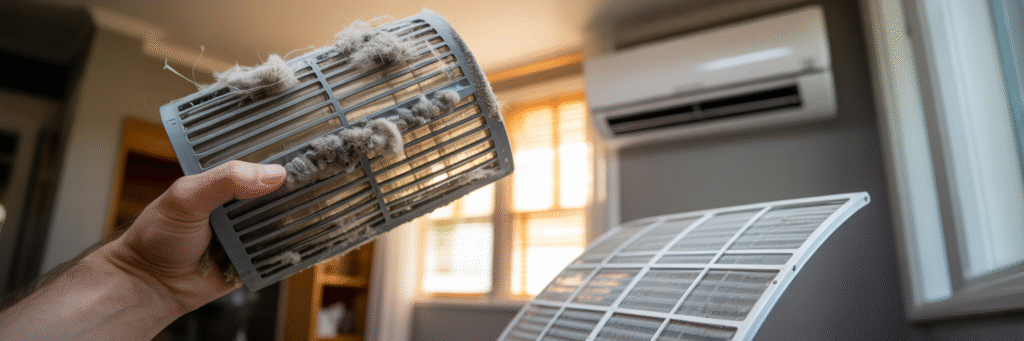
It’s 2am on a sweltering Brisbane night, your air conditioner is running full blast, yet your bedroom still feels like a sauna at 28°C. Before you panic and search for “emergency AC repair near me,” there’s one simple thing that could be causing your problem: a clogged air conditioner filter.
A dirty AC filter is the silent culprit behind 40% of air conditioning performance issues. It forces your system to work significantly harder, drives up electricity bills, and can lead to complete system failure during a heatwave.
Just last month, a family in Coorparoo called me in a panic because their AC “suddenly stopped working.” Their filter hadn’t been changed in over a year and was completely clogged. A simple filter replacement fixed the problem in minutes.
In this guide, you’ll learn when to replace your air conditioner filter, how to choose the right one for your Brisbane home, the step-by-step replacement process, and how to avoid common mistakes that damage your system.
Why Your Air Conditioner Filter Matters More Than You Think
That little filter you haven’t thought about in months is either protecting your system or quietly destroying it.
The Hidden Impact of a Dirty Filter
When your AC filter gets clogged, your system has to work significantly harder to push air through. According to the Australian Department of Energy, dirty air filters are responsible for 15-20% of wasted energy in residential cooling systems.
But the real issue is compressor damage. When airflow gets restricted by a clogged filter, the compressor has to work harder and harder to circulate refrigerant. It’s like asking someone to run a marathon while breathing through a straw. Regular filter changes prevent compressor failure, one of the most expensive AC repairs possible.
Your filter also protects against: dust and allergens (improving asthma and allergy symptoms), humidity issues (Brisbane’s sticky feeling even with AC running), mold growth in ductwork, and reduced system longevity. A clean filter means an extra 3-5 years of life from your unit.
The Brisbane-Specific Challenge
Brisbane’s climate is brutal on AC filters. High humidity (60-75% year-round) plus hot temperatures means moisture makes dust and particles stick together, clogging filters faster.
Construction dust is everywhere in Brisbane. I’ve seen filters turn completely grey in two weeks near construction sites. Storm season kicks up debris. Bayside suburbs (Wynnum, Manly, Sandgate) deal with salt air accelerating corrosion.
For Brisbane homes, monthly checks during peak season aren’t paranoid – they’re smart.
Warning Signs Your AC Filter Needs Immediate Replacement
Your AC is trying to tell you there’s a problem. Here are the five red flags:
Sign #1 – Your AC is Running But Not Cooling
Thermostat set to 22°C, but the room stays at 27-28°C. System running non-stop. Bedroom freezing but living room’s a sauna. Your clogged filter is creating a bottleneck – like trying to blow through a blocked straw.
Sign #2 – Skyrocketing Electricity Bills
A Coorparoo customer’s quarterly bill jumped dramatically. Her filter was packed solid with dust and pet hair. If your bill jumps 15-20% from last year and usage hasn’t changed, check your filter first.
Sign #3 – Strange Noises or Smells
Whistling/wheezing: Air struggling through blocked filter.
Musty odors: Mold growing in ductwork.
Burning smells: Turn it off NOW – fire hazard.
Grinding/rattling: Motor straining.
⚠️ Warning: Ice buildup with a dirty filter means turn off immediately. Running with ice causes permanent compressor damage.
Sign #4 – Visible Dust Around Vents
Grey dust accumulation on walls near vents means unfiltered air is circulating. If family members suddenly have more allergy symptoms, check your filter.
Sign #5 – Ice Buildup on AC Unit
Restricted airflow causes the evaporator coil to get too cold. Condensation freezes. This leads to refrigerant issues and compressor damage. Turn off immediately, let it thaw, replace filter. If ice returns with clean filter, call a professional.
Types of Air Conditioner Filters (And Which One You Need)
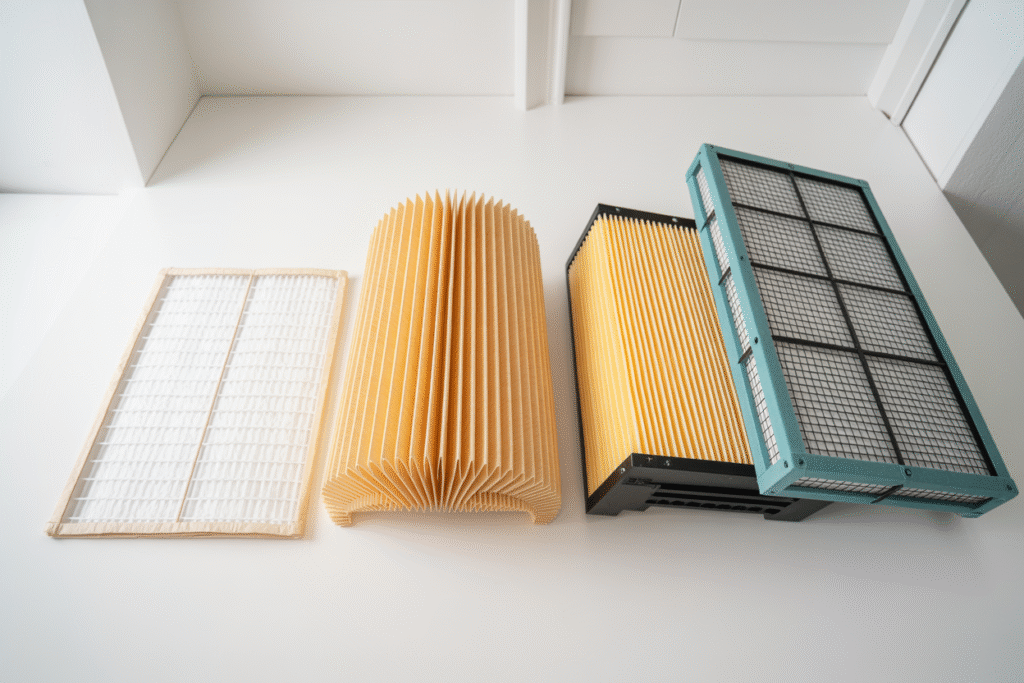
Walking into Bunnings and staring at that wall of filters can be overwhelming. Here’s your guide.
Disposable Fiberglass Filters
MERV 1-4 | 30-day lifespan | Best for holiday homes
The cheapest, most basic option. Catches large particles but pet hair, pollen, and mold spores sail right through. Unless you’re strapped or this is for a rarely-used property, skip these.
Pleated Disposable Filters
MERV 5-8 | 60-90 day lifespan | Best for most Brisbane homes
The sweet spot. Pleated material catches dust, dust mites, pollen, pet dander, mold spores, lint and fibers. This is what I use and recommend to 70% of customers.
High-Efficiency (HEPA-style) Filters
MERV 9-12 | 60-90 day lifespan | Best for allergies/asthma
Catches everything pleated filters catch, plus bacteria, fine dust, some viruses, and smoke particles. Check your AC manual first – some systems can’t handle the restriction.
Washable/Reusable Filters
MERV 4-8 | 5-10 year lifespan | Best for forgetful buyers
Wash, dry, reinstall. Rinse every 30-60 days.
Which One to Buy?
Standard home: Pleated disposable. Change every 60 days or monthly in summer. Allergies/asthma: High-efficiency filters. Verify system compatibility first. Forgetful: Washable filter. Always available when you remember to clean it.
Filter Sizing
Your filter size is printed on the side: “16x25x1” (height, width, thickness in inches).
Common Brisbane sizes:
- Split systems: 12x24x1 or 16x20x1
- Ducted systems: 20x25x1, 24x24x1, or larger
Wrong size = air flows around filter = defeats the purpose.
💡 Pro Tip: Multi-story and ducted systems often have 2-4 filters in different locations. Check all return air vents.
Step-by-Step: How to Replace Your AC Filter
Replacing your air conditioner filter is genuinely one of the easiest home maintenance tasks you can do yourself. Once you’ve done it once, you’ll laugh at how simple it is.
What You’ll Need
Required: Your new replacement filter (correct size)
Optional but helpful: Your phone (for photos), flashlight, step ladder, vacuum cleaner, damp cloth
You do NOT need: Special tools, technical knowledge, or a professional.
Safety First
Turn off your AC before you start. If you see mold, water damage, or rodent droppings when you open the filter compartment, stop and call a professional. Don’t force anything – if a panel won’t open easily, you’re probably doing something wrong.
The Replacement Process
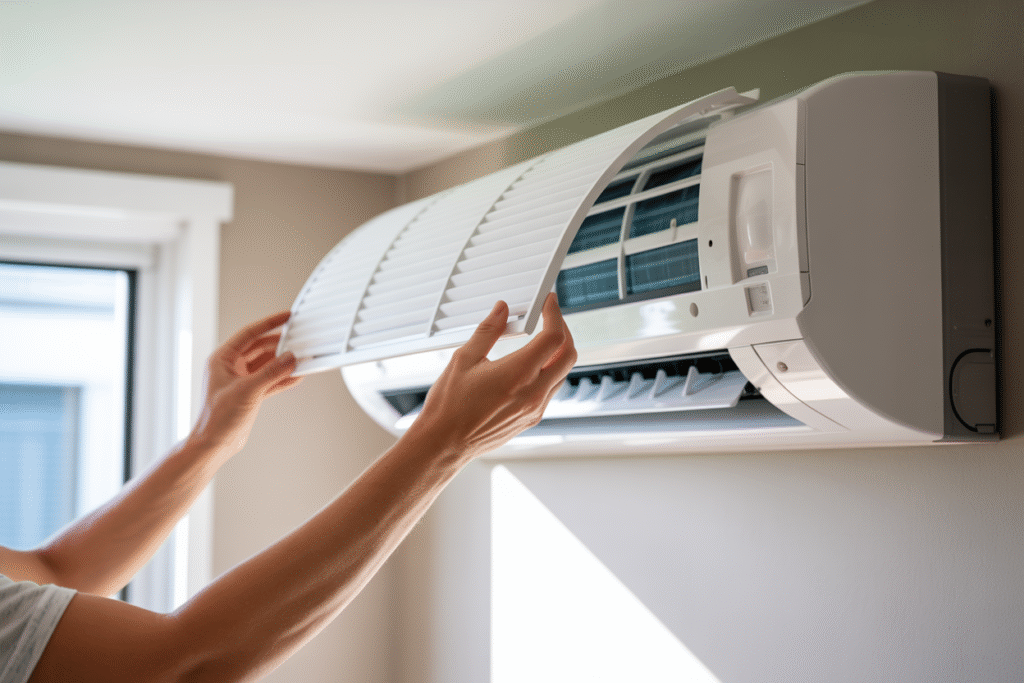
Step 1: Locate Your Filter
For split systems: Behind the front panel of your indoor unit – lift up or unclip the panel.
For ducted systems: Behind a return air vent grille (often in hallways or living areas), in a filter rack near your indoor unit, or in the ceiling cavity.
Step 2: Remove the Old Filter
Lift or unclip the front panel (it might click – that’s normal). The filter is usually sitting in slots or clips. Slide it out gently. Pay attention to which way the filter is facing – there’s almost always an airflow arrow printed on the frame.
Step 3: Inspect the Filter Housing
Look inside for dust, water stains, mold growth, or gaps. If you see a bit of dust, vacuum it out or wipe it down with a slightly damp cloth. If you see standing water or significant mold, call a professional.
Step 4: Install the New Filter
Check the airflow arrow on your new filter. It needs to point toward the air handler/ductwork and away from the room. Slide the new filter into place – it should fit snugly but not require force. Make sure it’s fully seated with no gaps around the edges.
Step 5: Close Everything Up
Clip the front panel back into place. You should hear it click. For ducted systems, screw the return air grille back on – don’t over-tighten.
Step 6: Turn Your AC Back On and Test
Turn your system back on and give it a few minutes. The airflow should feel stronger if your old filter was really clogged. Listen for any unusual sounds – if you hear rattling, something isn’t seated properly.
Troubleshooting
Filter won’t fit: Try rotating it 90 degrees. Check that you removed all packaging.
Air whistling around filter: Not seated properly. Remove and reinstall, making sure all edges are tucked in.
AC still not cooling: The filter wasn’t your only problem. You might need a professional.
Common Filter Mistakes Brisbane Homeowners Make
Even experienced homeowners fall into these traps. Let’s make sure you don’t.
Mistake #1: Waiting Until the AC Breaks Down
The AC is running fine, so why mess with it? You put it off. And again. Then during a 40°C heatwave – it stops working.
I had a customer in Indooroopilly who went two years without changing her filter. When I pulled it out, it was literally falling apart. The filter material had disintegrated. Unfiltered air had been circulating for months, and her compressor was showing signs of strain.
The fix: Set up automatic reminders in your phone calendar. Tie it to something you already do – like when daylight saving changes. Make it impossible to forget.
Mistake #2: Installing the Filter Backwards
Every filter has an airflow direction arrow printed on the frame. That arrow needs to point toward the air handler, away from the room. If you put it in backwards, you lose about 20-30% efficiency, and you risk tearing the filter material.
The fix: Before you remove your old filter, take a photo of which way the arrow is pointing. When you install the new one, make sure the arrow matches that photo.
💡 Pro Tip: Brisbane's coastal suburbs (Wynnum, Manly, Sandgate) need filter changes 30% more frequently than inland areas. Salt air accelerates corrosion and carries more particulates. If you're within 15km of the coast, check your filter monthly during summer.
Mistake #3: Forgetting About Multiple Filters
You diligently replace the filter in your hallway return air vent. Meanwhile, there are two more filters in other locations that haven’t been touched in three years.
Multi-story homes and ducted systems often have return air vents in multiple rooms. Each one might have its own filter.
The fix: Do a complete walkthrough. Look for every return air vent (these suck air in, not blow air out). Check for filters. Make a note of how many you have and where they are. Replace all of them on the same schedule.
Mistake #4: Using Filters That Are Too Restrictive
You buy the highest MERV-rated filter you can find, thinking you’re doing the right thing. But if your AC system wasn’t designed to handle that much restriction, your system starts straining.
Some older AC systems or smaller units genuinely can’t handle MERV 11+ filters.
The fix: Check your AC manual for recommended filter specifications. If your system seems to be working harder after installing a high-efficiency filter, drop back down to a standard pleated filter.
Mistake #5: Trying to “Extend the Life” of Disposable Filters
I’ve seen people try to vacuum off their disposable filters. I’ve seen people try to wash disposable filters. I’ve even seen someone tape up a torn filter.
When a disposable filter is done, it’s done. Vacuuming might remove surface dust, but the filter material is still clogged deep inside. Washing damages the material completely.
The fix: When the filter is dirty, replace it. If you’re worried, switch to washable filters that are designed to be cleaned and reused. Don’t try to DIY-extend disposable filters.
When to Call a Professional
Filter replacement is DIY-friendly, but sometimes your AC problems go beyond a dirty filter. Knowing when to call for help can save you from making problems worse.
When Filter Replacement Isn’t Enough
You replaced your filter correctly, but your AC still isn’t working right. Call a professional if you’re experiencing:
System still isn’t cooling properly – Running constantly without reaching temperature, or rooms staying warm despite the system running. Could be low refrigerant, failing compressor, or blocked condenser coils.
Strange noises continue – Grinding, squealing, or banging that persists after filter replacement means mechanical problems with motors, bearings, or fan blades.
System freezing up repeatedly – Ice returns even with a clean filter, indicating refrigerant issues, airflow problems, or thermostat malfunctions.
Water leaking from indoor unit – Your condensate drain is blocked or damaged, which can cause serious water damage if ignored.
Burning smells or electrical odors – Turn the system off immediately and call someone. This is potential fire hazard territory.
Electricity bills still high – Been changing your filter religiously but bills haven’t improved? Your AC might be inefficient for other reasons.
Red Flags During Filter Replacement
Heavy mold growth – Extensive black or green mold needs proper duct cleaning and potentially mold remediation.
Rodents or pests – Droppings or nesting material in ductwork needs professional handling.
Standing water or significant moisture – Indicates drainage issues or possibly a refrigerant leak.
Visible damage – Cracked housing, broken clips, damaged ductwork, or frayed wires need proper repairs.
Annual Professional Maintenance Matters
Even if you change your own filters, your AC needs a proper professional service once a year. Professionals check refrigerant levels, electrical connections, compressor function, thermostat calibration, clean coils, and clear drain lines.
Best time for annual service in Brisbane? September, before summer hits. You want to catch problems before you’re relying on your AC daily during heatwaves.
Trust your gut: If something feels off – pushy behavior, refusal to explain things, pressure to decide immediately, sudden price changes – it’s okay to get a second opinion.
Wrapping This Up
Air conditioner filter replacement is one of those simple maintenance tasks that makes a huge difference. It prevents expensive breakdowns, keeps your family healthier, and extends the life of your AC system.
For most Brisbane homeowners, this is something you can absolutely do yourself. It takes less than 10 minutes and requires no special tools or skills.
Change your filters regularly – every 30-60 days during Brisbane’s summer, every 60-90 days in cooler months. Check them monthly if you’ve got pets, allergies, or you’re near the coast. Don’t wait until your AC stops working.
Buy decent-quality filters – those middle-range pleated ones are perfect for most homes. Install them correctly with the arrow pointing toward the air handler. Replace them when they’re dirty.
And know when to call for help. Filter replacement is DIY-friendly, but AC repairs are not. If you’ve replaced your filter and things still aren’t right, get a professional involved.
Your AC works hard to keep your Brisbane home comfortable during brutal summers. Taking care of it with regular filter changes is the least we can do. And honestly, once you’ve done it a few times, it becomes second nature.
Now you know what to do, why it matters, how to avoid common mistakes, and when to call for backup.
So what are you waiting for? Go check your filter right now. Take 30 seconds, pull that filter out, and see when it was last changed.
I’ll bet it’s been longer than you think.
Ready to Book Your AC Service?
Professional air conditioner repairs and maintenance for Brisbane homes.
Same-day and next-day appointments available.
Frequently Asked Questions About Air Conditioner Filter Replacement
Q.Can I just vacuum my filter instead of replacing it?
No. Vacuuming only removes surface dust. The filter material inside remains clogged with particles you can't see. For disposable filters, when they're dirty, replace them. If you want to clean and reuse, buy washable filters designed for that purpose - don't try to extend disposable filter life.
Q.What happens if I run my AC without a filter?
Never run your AC without a filter, even temporarily. Unfiltered air fills your ductwork with dust and debris, damages your evaporator coil, drastically reduces efficiency, and can cause expensive compressor damage. If you removed your filter for cleaning or replacement, turn the AC off until the new filter is installed.
Q.My filter looks clean, do I still need to replace it?
Yes. Filters can look relatively clean but still be restricting airflow with particles trapped deep in the material. Stick to the replacement schedule based on time, not appearance. Hold it up to light - if you can't see through it clearly, replace it regardless of how clean it looks.
Q.Do I need to turn off my AC before changing the filter?
It's recommended but not always necessary. Turning off the AC (at the thermostat or breaker) prevents the system from trying to pull air while the filter is out. This is safer and prevents dust from being sucked into your system during the swap. It only takes a minute to switch off, change the filter, and turn it back on.
Q.Why does my new filter whistle or make noise?
Either it's not seated properly (gaps around the edges), you installed it backwards (check the airflow arrow), or the filter is too restrictive for your system. Remove it, check the arrow direction matches the old filter, ensure all four edges are fully tucked into the housing, and reinstall. If noise continues, try a less restrictive filter.
Q.Can a dirty filter cause my AC to freeze up?
Absolutely. A clogged filter restricts airflow over the evaporator coil, causing it to get too cold and freeze. If you see ice on your AC unit and have a dirty filter, turn the system off immediately, let it thaw completely (several hours), replace the filter, then restart. If freezing continues with a clean filter, call a professional.
Q.What do I do if I can't find my air conditioner filter?
For split systems: Look behind the front panel of your wall-mounted indoor unit - it usually lifts up or clips off. For ducted systems: Check behind return air vent grilles (usually in hallways or living areas), near the indoor air handler unit, or in the ceiling cavity. If you genuinely can't locate it, call a professional - some older systems have unusual filter locations.